China’s professional devices industry is broader than a simple factory ranking. It includes industrial robots, medical equipment, laboratory instruments, telecom hardware, and specialized imaging systems. The International Federation of Robotics reported 276,288 industrial robot installations in China during 2023. That represented about 51% of global installations. These figures show manufacturing scale, but scale alone does not prove product reliability.
A useful review should examine certification, engineering depth, after-sales support, and export experience. The IFR World Robotics 2024 report offers valuable evidence for automation manufacturers. Dell’Oro Group’s telecom research also helps assess global network equipment competition. For medical products, buyers should cross-check regulatory registrations, clinical evidence, and quality-management records. Names such as Huawei, Mindray, Hikvision, DJI, and Siasun often appear in professional markets. However, each company serves a different technical field. Comparing them directly can create an unfair conclusion.
This article therefore defines “top” through measurable performance, not popularity alone. It considers production capability, research investment, system integration, and customer support. A manufacturer may offer impressive hardware but weak documentation. Another may provide excellent service while serving only a narrow niche. That distinction matters. Readers should also verify current certifications and product specifications before making procurement decisions. Industry reports can guide the shortlist, yet they cannot replace factory audits, trial orders, and expert evaluation. This is where a careful assessment becomes more valuable than a polished ranking.
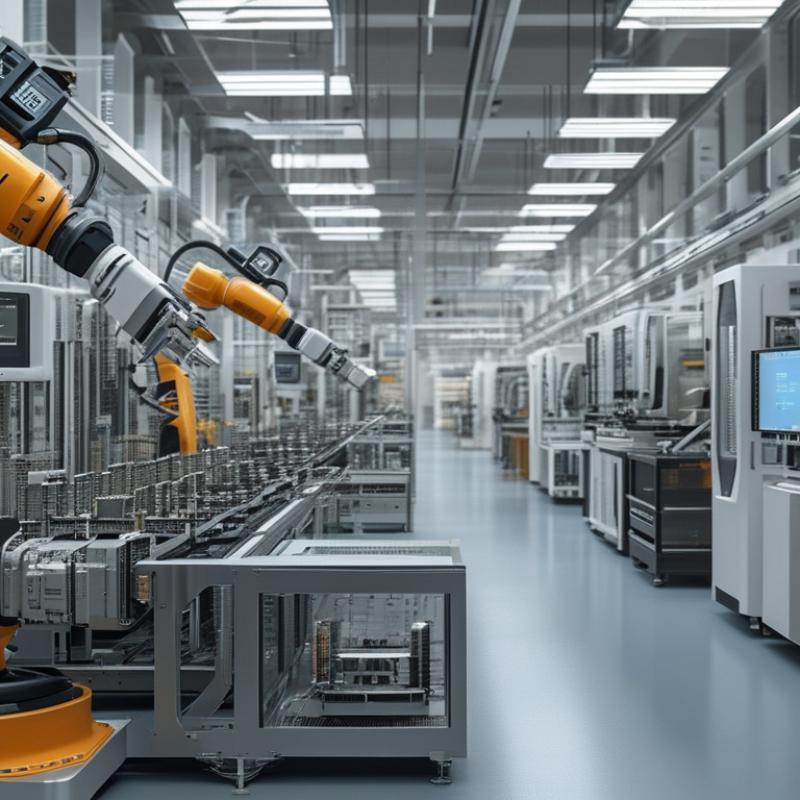
What Are China Top Professional Devices Manufacturers?
Professional device manufacturers in China are not limited to factories producing finished equipment. The term covers companies that design, engineer, assemble, test, and maintain devices for trained users. Their products may serve hospitals, laboratories, factories, research centers, and public infrastructure. The scope often includes original equipment manufacturing, contract development, sensors, control systems, inspection tools, and specialized software. Product quality depends on more than a modern workshop. Traceability, calibration records, risk management, and after-sales training also matter.
China’s National Medical Products Administration reported more than 31,000 medical-device manufacturers by the end of 2023. This figure shows the sector’s scale, but it does not prove equal capability. The China Medical Device Industry Association has repeatedly highlighted uneven innovation, quality systems, and testing capacity among manufacturers. Professional buyers should therefore examine audited production records, certification coverage, complaint handling, and delivery performance. A polished catalogue can still hide weak validation. That is an uncomfortable point, but an important one.
Tips: Define the device category before comparing suppliers. Check whether the manufacturer controls critical processes in-house. Request sample inspection data, calibration intervals, and documented corrective actions. Also confirm whether technical support covers installation, operator training, and spare parts. Independent testing and site audits add confidence, especially when published market data describes the industry broadly rather than one factory’s actual performance.
| Professional Device Segment | Typical Products | Primary Users | Core Manufacturing Capabilities | Common Quality and Regulatory Frameworks | Typical Evaluation Criteria |
|---|---|---|---|---|---|
| Medical and Healthcare Devices | Patient monitors, infusion equipment, diagnostic imaging components, surgical instruments, rehabilitation equipment, and laboratory diagnostic systems. | Hospitals, clinics, diagnostic laboratories, emergency services, and home-care providers. | Precision assembly, sterile or clean-area production, sensor integration, medical software development, traceability, and final performance testing. | China medical-device regulations, applicable GB standards, ISO 13485 quality-management practices, electrical-safety standards, and risk-management requirements. | Clinical suitability, registration status, biocompatibility where applicable, alarm performance, reliability, service support, and documentation quality. |
| Industrial Measurement and Test Equipment | Digital multimeters, oscilloscopes, calibration instruments, vibration testers, pressure gauges, thermal measurement systems, and dimensional inspection equipment. | Factories, maintenance departments, engineering laboratories, calibration organizations, and research institutions. | High-accuracy sensor production, precision machining, electronic calibration, embedded software, electromagnetic compatibility testing, and measurement traceability. | Applicable IEC and GB/T standards, ISO 9001 quality systems, laboratory competence practices, and national or industry-specific metrology requirements. | Accuracy, repeatability, calibration interval, measurement range, environmental stability, software functionality, and after-sales calibration support. |
| Laboratory and Scientific Instruments | Analytical balances, centrifuges, spectrometric systems, incubators, thermal analyzers, sample-preparation equipment, and laboratory automation systems. | Universities, pharmaceutical laboratories, food-testing facilities, chemical plants, hospitals, and public research institutions. | Optical and mechanical integration, contamination control, temperature management, fluid handling, automation, data acquisition, and method validation support. | ISO 9001 practices, laboratory quality requirements, electrical-safety standards, applicable GB/T and IEC standards, and sector-specific testing procedures. | Detection limit, repeatability, throughput, temperature stability, data integrity, user safety, consumable compatibility, and maintenance requirements. |
| Industrial Automation and Control Devices | Programmable controllers, industrial gateways, servo systems, machine-vision equipment, process controllers, and robotic end-effectors. | Automotive, electronics, packaging, logistics, energy, chemical, and general manufacturing industries. | Real-time control, industrial communication, motion control, machine vision, firmware development, enclosure protection, and system integration. | Applicable IEC and GB/T standards, ISO 9001 quality systems, electromagnetic compatibility requirements, functional-safety practices, and machinery-safety rules. | Cycle time, control precision, uptime, communication compatibility, cybersecurity provisions, operating-temperature range, and integration cost. |
| Energy and Power-Testing Equipment | Power-quality analyzers, relay-test systems, battery-test equipment, insulation testers, cable-fault locators, and grid-monitoring devices. | Power utilities, renewable-energy operators, electrical contractors, energy-storage facilities, and industrial maintenance teams. | High-voltage design, power electronics, thermal management, data logging, insulation protection, battery simulation, and field calibration. | Applicable IEC and GB/T standards, electrical-safety requirements, electromagnetic compatibility rules, and utility-specific technical specifications. | Voltage and current accuracy, safety category, test-channel capacity, load performance, portability, software reporting, and field-service availability. |
| Environmental Monitoring Devices | Air-quality monitors, water-quality analyzers, particulate sensors, gas detectors, noise meters, and industrial emission-monitoring systems. | Environmental agencies, factories, laboratories, municipalities, construction sites, and occupational-safety departments. | Sensor calibration, sampling systems, weatherproof enclosure design, telemetry, remote monitoring, data storage, and long-term outdoor reliability. | Applicable environmental-monitoring standards, GB/T requirements, ISO 9001 practices, calibration procedures, and occupational or industrial safety regulations. | Detection range, response time, calibration stability, data accuracy, environmental protection rating, connectivity, and compliance reporting capability. |
| Safety, Inspection, and Security Devices | Gas detectors, non-destructive testing systems, inspection cameras, access-control equipment, fire-detection components, and workplace-safety instruments. | Industrial plants, construction companies, transport operators, laboratories, commercial buildings, and public-sector organizations. | Sensor fusion, ruggedized design, alarm management, image processing, battery safety, ingress protection, and field-testing capability. | Applicable GB standards, fire-safety requirements, occupational-safety rules, electromagnetic compatibility standards, and product-specific certification requirements. | Alarm reliability, false-alarm rate, response time, durability, operating range, inspection records, battery life, and emergency-service support. |
| Telecommunications and Network-Test Equipment | Optical-fiber testers, protocol analyzers, signal generators, network performance testers, radio-frequency measurement equipment, and timing instruments. | Telecom operators, network contractors, data centers, electronics manufacturers, laboratories, and infrastructure-maintenance teams. | Radio-frequency engineering, optical alignment, high-speed electronics, firmware development, precision timing, shielding, and automated test software. | Applicable telecommunications standards, GB/T and IEC requirements, electromagnetic compatibility rules, information-security practices, and operator specifications. | Bandwidth, sensitivity, measurement uncertainty, protocol coverage, portability, data export, software updates, and technical support. |
| Specialized Mechanical and Process Equipment | Precision pumps, laboratory mixers, vacuum systems, filtration units, thermal-processing equipment, and customized production-line modules. | Pharmaceutical, food, chemical, semiconductor, research, and advanced-manufacturing organizations. | Precision machining, material selection, process control, hygienic or cleanroom design, fluid dynamics, thermal management, and customized engineering. | Applicable GB/T and industry standards, ISO 9001 practices, occupational-safety requirements, pressure or electrical-safety rules where applicable, and customer validation protocols. | Process capacity, repeatability, material compatibility, energy efficiency, cleanability, maintenance access, customization level, and total operating cost. |
| Scope note: In this context, professional device manufacturers are producers that design, engineer, assemble, test, and support specialized equipment for regulated, industrial, scientific, healthcare, or infrastructure applications. “Top” should be assessed through objective indicators such as certification, documented quality systems, production capacity, technical performance, export capability, delivery reliability, and lifecycle service rather than brand visibility alone. | |||||