China’s medical-device sector is expanding from low-cost manufacturing toward regulated, technology-driven production. The National Medical Products Administration’s 2023 annual report shows a broad and rapidly growing registration base across Class I, II, and III devices. This scale creates more choices for hospitals, distributors, and private buyers. It also creates more uncertainty.
Global demand remains substantial. The World Health Organization reports that more than 2.5 billion people need at least one assistive product, with access expected to reach 3.5 billion by 2050. MedTech Europe’s 2024 industry data also confirms the medical-technology market’s strong global value and continued innovation. These figures explain why Chinese manufacturers are investing in imaging systems, patient monitoring, surgical tools, rehabilitation equipment, and home-care technologies.
This guide reviews ten leading Chinese companies creating medical devices for international buyers. The evaluation considers product specialization, manufacturing experience, regulatory documentation, quality systems, export capability, and after-sales support. Certifications such as ISO 13485 matter, but they should not be treated as complete proof of product performance. Buyers still need to verify NMPA records, clinical evidence, electrical safety testing, cybersecurity controls, and local registration requirements.
Some companies appear impressive on paper. The real test is often less visible: a calibration certificate, a responsive service engineer, or a replacement sensor arriving on time. Rankings can simplify a complicated market. They cannot replace technical due diligence, independent testing, or direct supplier audits. That limitation deserves attention.
A leading Chinese medical device manufacturer is defined by evidence, not factory size. The WHO Global Atlas of Medical Devices identifies more than two million device types worldwide, showing how complex this sector has become. Strong manufacturers control design, materials, sterilization, testing, and traceability under one quality system. ISO 13485 certification helps, but certification alone is not enough. Buyers should examine audit records, complaint handling, corrective actions, and delivery consistency.
Clinical usefulness matters. The NMPA reported 61 innovative medical devices approved in China during 2023, reflecting stronger domestic research and review pathways. A capable manufacturer can explain its clinical data, risk controls, and post-market monitoring in practical language. It should also provide stable batch records, clear technical files, and responsive engineering support. Small details matter.
No factory is flawless. A low complaint rate does not automatically prove excellent performance, especially when reporting practices differ. Buyers should compare rejection data, field-failure trends, validation methods, and independent test results. Site visits can reveal ordinary but important facts: clean storage areas, labeled components, calibrated instruments, and workers who understand the process. Cost still matters, yet an unusually low quotation may hide weaker validation or limited service capacity. That gap deserves careful questioning. Leading manufacturers keep improving, admit measurable weaknesses, and treat reliability as a daily operating discipline rather than a marketing claim.
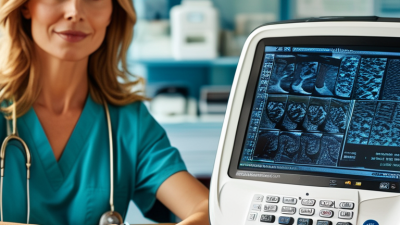
When evaluating Chinese medical device companies, buyers should look beyond product catalogs and attractive prices. A reliable supplier should explain its quality management system, production controls, and testing methods clearly. Ask whether the factory maintains ISO 13485 certification and supports registration requirements in your target market. Certifications alone are not enough.
Request technical files, risk assessments, sterilization records, and traceability procedures. Review how the company handles design changes, complaints, recalls, and corrective actions. A factory visit can reveal practical details, such as cleanroom discipline, calibration labels, and storage conditions. During one audit, an organized production line impressed me, but slow document responses raised concerns. Small gaps can become expensive later.
Tips: Compare several suppliers using the same checklist. Request samples from regular production, not special demonstration units. Confirm lead times, spare parts, training, warranty terms, and post-sale support in writing. Speak with technical staff, not only sales representatives. Check whether clinical or performance evidence matches the device’s intended use. Ask direct questions about subcontracted processes and software updates. Buyers should also inspect packaging, labeling, and shipment protection. A strong supplier welcomes reasonable questions. However, no evaluation is perfect; field performance may expose weaknesses that factory documents miss.
How buyers should evaluate Chinese medical device companies using a practical procurement weighting model aligned with medical-device quality, regulatory, safety, and supply-chain requirements.
The criteria reflect commonly used requirements and standards in medical-device procurement, including ISO 13485 quality management, ISO 14971 risk management, IEC 60601 electrical safety, NMPA registration, EU MDR and FDA regulatory readiness, clinical evidence, production capability, and after-sales support. Buyers can adjust the weights according to device risk class and target market.
The Top 10 Chinese Medical Device Companies for Buyers should be judged by evidence, not visibility. A useful shortlist includes manufacturers of imaging systems, patient monitors, surgical instruments, diagnostic equipment, rehabilitation products, hospital furniture, laboratory devices, dental equipment, consumables, and home-care technology. These ten categories reflect common purchasing needs across hospitals, clinics, distributors, and private practices.
During supplier evaluations, buyers should inspect production lines, quality records, sample units, and after-sales procedures. A reliable manufacturer can explain its quality system clearly. Check ISO 13485 certification, applicable NMPA registration, and export documentation for the target market. Product specifications should match test reports, not only a sales brochure. Ask about spare parts, software updates, warranty response times, and operator training. Small details matter, especially replacement sensors and cable compatibility.
A polished showroom can mislead. Request a live demonstration using the same configuration offered in the quotation. Compare calibration data, packaging protection, user manuals, and delivery schedules. The lowest price may create higher service costs later. No shortlist is perfect. Some companies have strong engineering teams but limited overseas support, while others communicate well but offer fewer customization options. Buyers should record these weaknesses openly, verify references, and use a staged order before committing to larger volumes.
China’s medical-device market includes manufacturers serving hospitals, clinics, laboratories, and home-care buyers. A useful shortlist should examine products and practical strengths, not only production scale.
One manufacturer focuses on ultrasound systems, offering portable scanners with clear imaging and battery operation. Another develops patient monitors for ECG, oxygen saturation, temperature, and blood pressure tracking. A third supplies infusion pumps, valued for adjustable flow control and simple alarm displays. Ventilator producers emphasize stable respiratory support, low-noise operation, and easy cleaning. Sterilization equipment makers provide steam systems with digital cycle records. These details matter during busy clinical shifts.
Other featured manufacturers produce X-ray and imaging equipment, often emphasizing compact designs and radiation-control features. Laboratory suppliers create blood analyzers and chemistry systems with automated testing, barcode handling, and software integration. Rehabilitation equipment makers offer electric therapy beds, mobility devices, and adjustable treatment settings. Dental manufacturers concentrate on treatment units, imaging tools, and chair ergonomics. A tenth group develops surgical instruments and operating-room accessories, where material quality and precise finishing are essential.
From buyer experience, documentation can reveal more than a polished catalog. Ask for technical files, quality certificates, warranty terms, training plans, and local service contacts. No supplier is perfect. A low price may hide slower spare-part delivery or limited software support. Buyers should compare sample reports, test interfaces, cleaning procedures, and delivery records before approval. Clearance alone is not enough. Practical verification remains necessary.
| No. | Manufacturer Profile | Main Product Categories | Key Products for Buyers | Core Strengths | Typical Buyer Applications | Important Purchasing Checks |
|---|---|---|---|---|---|---|
| 1 | Large Medical Monitoring Manufacturer | Patient monitoring and critical-care equipment | Multiparameter monitors, bedside monitors, central monitoring stations, pulse oximeters, ECG machines | Broad hospital portfolio, integrated monitoring platforms, strong engineering support, and large-scale production capability | Hospitals, intensive-care units, operating rooms, emergency departments, and ambulances | Parameter configuration, alarm functions, software compatibility, accessories, service coverage, and local regulatory registration |
| 2 | Diagnostic Imaging Manufacturer | Ultrasound and medical imaging systems | Cart-based ultrasound systems, portable ultrasound units, color Doppler systems, and imaging accessories | Competitive imaging performance, portable designs, application-specific software, and product coverage from basic to advanced systems | Radiology, obstetrics, cardiology, emergency care, primary-care clinics, and point-of-care diagnosis | Probe selection, image quality, transducer lifespan, export documentation, cybersecurity, training, and maintenance availability |
| 3 | Hospital Anesthesia and Life-Support Manufacturer | Anesthesia workstations and respiratory care equipment | Anesthesia machines, ventilators, respiratory monitors, vaporizers, and breathing circuits | Integrated operating-room solutions, dependable gas-delivery systems, configurable workflows, and established hospital procurement experience | Operating rooms, intensive-care units, recovery rooms, and emergency departments | Ventilation modes, oxygen and gas compatibility, battery backup, preventive maintenance, consumables, and compliance with applicable standards |
| 4 | Infusion and Medication-Delivery Manufacturer | Infusion therapy and clinical drug-delivery devices | Infusion pumps, syringe pumps, volumetric pumps, enteral feeding pumps, and infusion monitoring systems | Precise flow control, drug-library functions, safety alarms, compact designs, and compatibility with hospital medication workflows | General wards, intensive care, oncology, pediatrics, operating rooms, and home-care services | Accuracy testing, occlusion detection, free-flow protection, disposable compatibility, battery performance, and software validation |
| 5 | Medical Imaging and Radiotherapy Systems Manufacturer | Computed tomography, magnetic resonance, X-ray, and radiotherapy equipment | CT scanners, MRI systems, digital radiography systems, mobile X-ray units, and radiotherapy planning equipment | Advanced imaging research, broad equipment platforms, system integration, and manufacturing experience in high-value hospital equipment | Diagnostic imaging centers, hospitals, cancer centers, emergency departments, and mobile screening services | Regulatory approvals, radiation protection, image reconstruction, installation requirements, facility shielding, uptime commitments, and service response time |
| 6 | Dialysis and Renal-Care Manufacturer | Hemodialysis and continuous renal-replacement therapy | Hemodialysis machines, dialysis chairs, water-treatment systems, blood tubing sets, and dialysis concentrates | Complete renal-care solutions, equipment-and-consumable integration, process control, and support for dialysis-center projects | Dialysis hospitals, renal clinics, intensive-care units, and public-health treatment programs | Water quality requirements, consumable availability, treatment parameters, infection-control procedures, operator training, and local approvals |
| 7 | In-Vitro Diagnostics Manufacturer | Laboratory analyzers and diagnostic reagents | Chemistry analyzers, immunoassay systems, hematology analyzers, molecular testing platforms, and related reagents | High-throughput laboratory workflows, integrated reagent systems, automation options, and broad routine-testing coverage | Hospital laboratories, independent diagnostic centers, public-health laboratories, and blood banks | Analytical accuracy, calibration stability, reagent shelf life, sample throughput, quality-control materials, connectivity, and registration of each test kit |
| 8 | Orthopedic Implant and Surgical Instrument Manufacturer | Orthopedic implants and surgical instruments | Trauma plates, screws, spinal systems, joint-replacement components, and orthopedic instrument sets | Precision machining, titanium and implant-grade material processing, procedure-specific instrument design, and custom hospital support | Orthopedic surgery, trauma care, spine surgery, sports medicine, and rehabilitation hospitals | Material certificates, sterilization compatibility, dimensional accuracy, traceability, clinical documentation, instrument completeness, and surgeon training |
| 9 | Minimally Invasive and Surgical-Device Manufacturer | Endoscopy, laparoscopic, electrosurgical, and interventional devices | Endoscopic instruments, laparoscopic tools, electrosurgical units, surgical stapling devices, and access products | Procedure-focused product development, precision components, sterile disposable options, and compatibility with minimally invasive workflows | General surgery, gastroenterology, gynecology, urology, thoracic surgery, and interventional procedures | Sterility assurance, device compatibility, jaw performance, packaging integrity, single-use labeling, usability evaluation, and clinical training |
| 10 | Home Healthcare and Rehabilitation Manufacturer | Home-care, respiratory, mobility, and rehabilitation equipment | Oxygen concentrators, respiratory therapy devices, electric wheelchairs, patient lifts, rehabilitation equipment, and home monitors | User-friendly designs, portable equipment, cost-effective manufacturing, private-label flexibility, and suitability for community and home-care programs | Home healthcare providers, nursing facilities, rehabilitation centers, pharmacies, distributors, and elderly-care programs | Electrical safety, noise level, battery endurance, replacement parts, user instructions, warranty terms, after-sales support, and country-specific conformity requirements |
China’s medical device market includes many capable manufacturers, but a polished website proves very little. Buyers should compare suppliers through documented evidence, not promises. Check the product’s intended use, risk classification, technical specifications, and production history. Ask for an ISO 13485 certificate, recent quality records, inspection reports, and the device’s registration status in your destination market. Confirm that certificates match the exact factory and product model.
Request a working sample before placing a large order. Test measurements, packaging, labeling, battery performance, and user instructions under real operating conditions. A factory visit or independent audit can reveal weak hygiene controls, rushed inspections, or poor traceability. Review the purchase contract carefully. It should define materials, acceptance standards, warranty duties, spare parts, delivery dates, and procedures for defective units. Avoid paying only because a supplier offers the lowest price. Cheap components can create expensive compliance problems.
Tips: Use a comparison sheet. Record every claim, certificate number, test date, and responsible contact. Verify certificates with the issuing body when possible. Ask who performs final inspection. Keep samples and approval records. I have found that small details, such as unclear carton labels, often predict larger quality issues. No checklist is perfect, and buyer assumptions can still fail. Independent technical and regulatory advice remains valuable when the device affects diagnosis, treatment, or patient safety.
|
This is a medical device. |