How to Choose the Best Medical Accessories for Your Needs?
In today's healthcare landscape, the right medical accessories play a crucial role in patient care and overall effectiveness. According to a recent report by ResearchAndMarkets, the global medical accessories market is expected to reach $25 billion by 2025. This growth highlights the importance of selecting appropriate accessories that suit specific medical needs.
Dr. Sarah Thompson, a leading expert in the field, stated, "Choosing the right medical accessories can significantly impact treatment outcomes." This emphasizes the necessity for healthcare professionals and patients alike to make informed decisions. When considering medical accessories, factors such as functionality, compatibility, and comfort must come into play.
Many underestimate the significance of these items. Not all medical accessories are created equal. Some products may not meet the quality standards needed for effective treatment. It's vital to reflect on the choices available and understand the specifics that align best with individual requirements. The right selection not only aids in recovery but also enhances the overall healthcare experience.

Understanding Different Types of Medical Accessories for Various Needs
When choosing medical accessories, it's essential to understand the different types available. Some accessories cater to specific needs, like mobility aids for seniors or orthopedic supports for sports injuries. Others might be for daily health monitoring, such as blood pressure monitors and glucose meters. These tools can make health management easier and more efficient.
Tips: Consider your specific requirements. Are you recovering from surgery or managing a chronic condition? Your needs will dictate the type of accessory suitable for you. Look for items that offer comfort and ease of use. This can significantly impact adherence to treatment.
Remember that not all accessories are universally suitable. A product that works for one person may not be effective for another. It’s a process of trial and error. Be open to adjustments and modifications. Consulting with a healthcare professional is always a good idea. They can provide personalized advice tailored to your circumstances, ensuring you make informed decisions.
How to Choose the Best Medical Accessories for Your Needs? - Understanding Different Types of Medical Accessories for Various Needs
| Accessory Type |
Function |
Suitable For |
Key Features |
| Stethoscope |
Listening to heart and lung sounds |
Doctors and Medical Students |
Acoustic or electronic options, high sound quality |
| Blood Pressure Monitor |
Measuring blood pressure levels |
Patients with hypertension |
Digital or manual, memory storage |
| Thermometer |
Measuring body temperature |
General public and healthcare providers |
Digital, infrared options |
| Pulse Oximeter |
Measuring blood oxygen saturation |
Patients with respiratory conditions |
Portable, fast readings |
| Wheelchair |
Assisting with mobility |
Individuals with mobility impairments |
Manual or electric, customizable options |
| Oxygen Concentrator |
Providing supplemental oxygen |
Patients with lung diseases |
Portable, continuous flow settings |
Assessing Quality Standards: What to Look for in Medical Accessories
Choosing medical accessories requires careful consideration of quality standards. These standards can significantly impact patient care. A report by the World Health Organization indicates that 78% of medical errors relate to inadequate tools. This statistic underscores the importance of selecting high-quality accessories.
When assessing medical accessories, focus on materials and certifications. Look for items made from durable, non-toxic materials. They should also meet established safety standards. The FDA provides guidelines that help ensure safety and efficacy. Not all products adhere to these standards, leading to potential risks. A study published in the Journal of Medical Devices found that 35% of medical accessories fail to meet basic safety requirements.
Quality control during manufacturing is essential. Accessories should undergo rigorous testing processes. Consider suppliers who are transparent about their quality assurance methods. Some may skip crucial tests to save time. This could have dire consequences for patients. Access to reliable accessories can directly influence treatment outcomes, making quality an essential criterion in your decision-making process.
Evaluating Cost-Effectiveness: Budgeting for Essential Medical Accessories
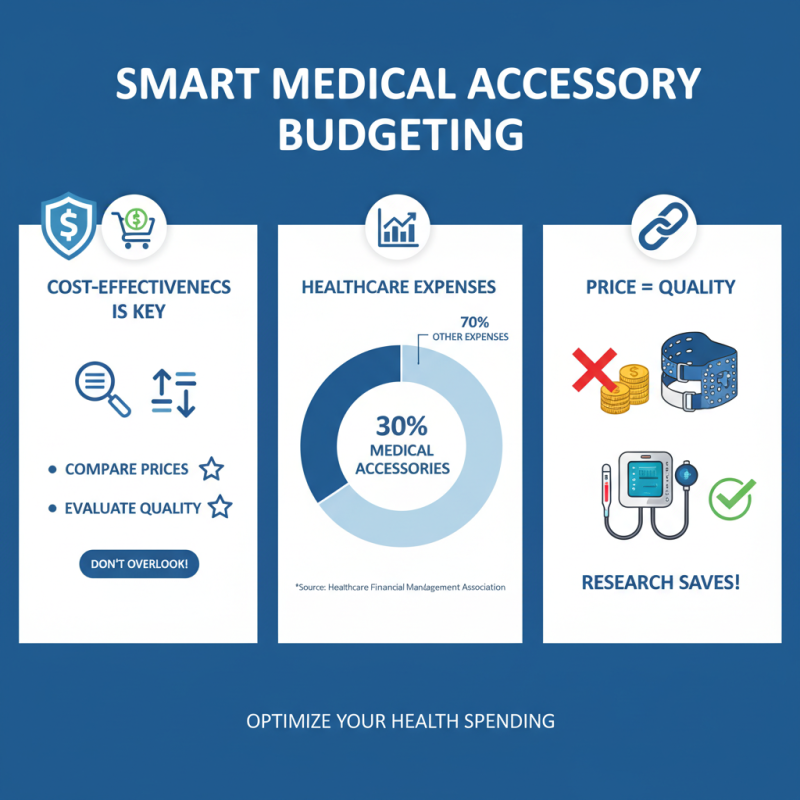
When budgeting for medical accessories, cost-effectiveness is crucial. Many consumers overlook the necessity of comparing prices and quality. A study from the Healthcare Financial Management Association indicates that 30% of healthcare expenses can be attributed to medical accessories. Not every high-priced item guarantees better quality.
Consider your specific needs. Evaluate what accessories will provide the best value, especially for those on a budget. For instance, basic supplies like gloves and masks are essential yet often disregarded. A report by the Centers for Disease Control and Prevention highlights that proper PPE can reduce infection rates significantly, impacting overall healthcare costs.
However, not all decisions are clear-cut. Some advanced accessories may initially appear expensive but offer long-term savings through durability. Reflect on need versus want. Budgeting requires balancing what is essential and what can be considered an overindulgence. Regular reviews of your accessory use and costs can reveal patterns and avoid waste.
Identifying Your Specific Health Requirements and Accessories for Them
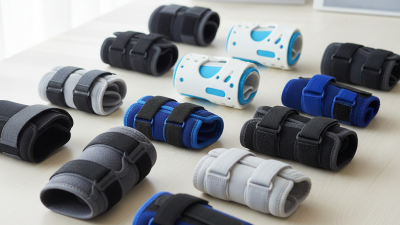
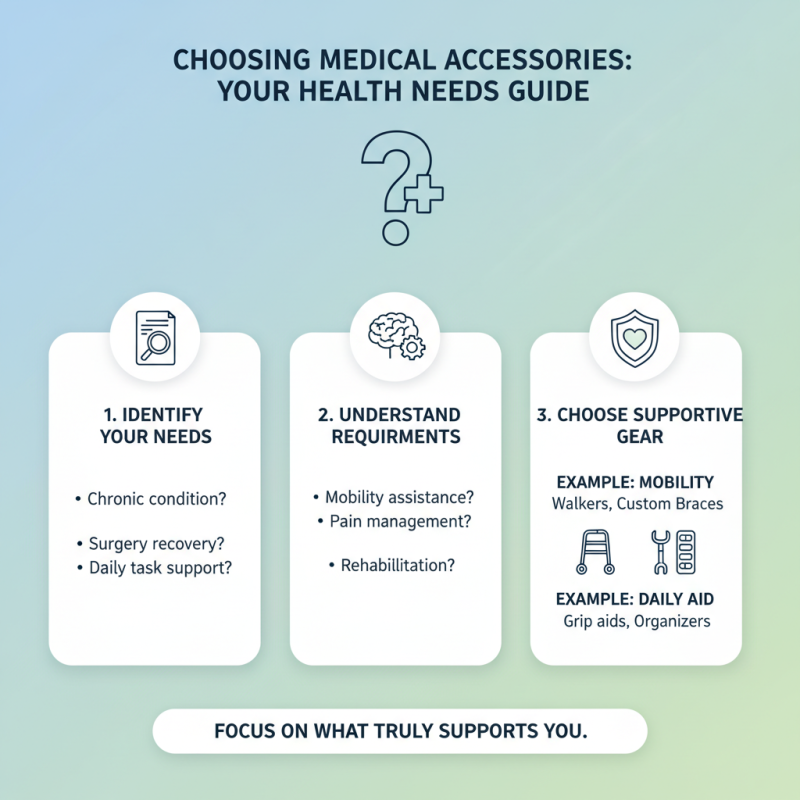
When choosing medical accessories, it is crucial to identify your specific health needs. Are you managing a chronic condition or recovering from surgery? Understanding your requirements can significantly influence your choices. For example, if you need mobility assistance, consider accessories like walkers or custom-fit braces. Focus on what truly supports your daily tasks.
Tips: Always consult with healthcare professionals for personalized advice. Their insights can highlight what will work best for your health situation.
Another aspect to consider is comfort. A poorly fitted accessory can cause more harm than good. Take your time when trying on items. Ensure they provide the support you need without causing discomfort.
Tips: Pay attention to your body's signals. If something feels off, don't ignore it. Adjust or seek alternatives that cater to your unique needs.
Finally, evaluate the practicality of the accessories. Think about how often you will use them. If an accessory is too complex, it may end up unused. Choose items that seamlessly fit into your routine.
Consulting Healthcare Professionals: Ensuring Proper Selection of Accessories
When selecting medical accessories, consulting healthcare professionals is crucial. They can provide insight into what is necessary for individual needs. Understanding the specific requirements helps narrow down choices. For instance, a physical therapist may recommend certain braces or supports. Their expertise ensures that you choose accessories that enhance your care.
Additionally, it's important to consider comfort and functionality. A recommended item might not always feel right. Sometimes, users face difficulty adjusting to new devices. It can take time to find the perfect fit. Discussing these concerns with professionals can lead to better choices. Reflections on personal experiences can also guide future decisions, ensuring accessories truly serve their purpose.
Choosing the Best Medical Accessories